In an era increasingly attuned to environmental sustainability, the term “organic” has become a badge of honor that many brands proudly display. But what does it truly mean to be organic? Is it merely a certification, or does it represent a deeper philosophy shaping our relationship with the Earth? As we reflect on our mindset toward nature and what we consume, it becomes clear that organic practices are just the beginning of a broader journey toward eco-responsibility.
Understanding organic – More than a certification
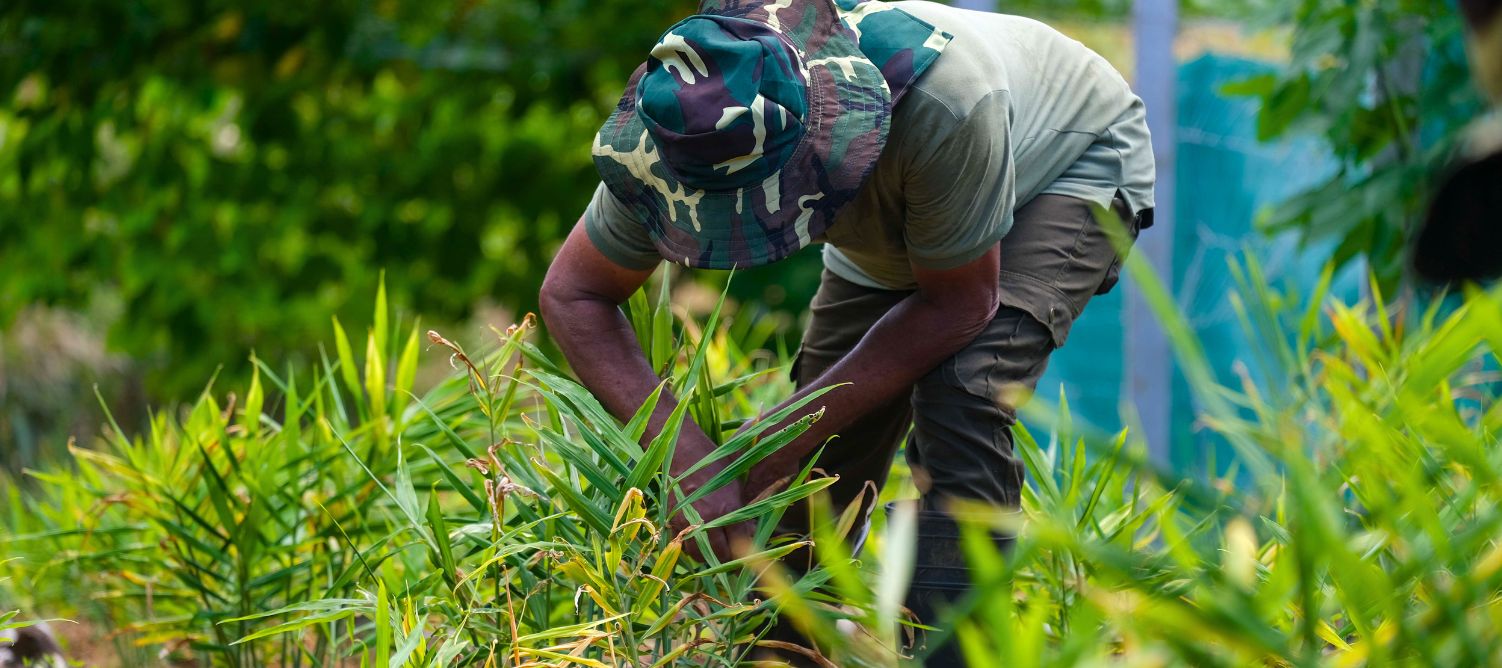
At its core, organic farming is grounded in principles that emphasize nurturing the land rather than depleting it. This approach enhances biodiversity and soil health and promotes ecological balance, fostering food production systems that are more natural.
The term “organic” derives from the Latin word organicus, meaning “of or relating to an organ or instrument,” which has evolved to represent something structured as a living system. The concept of organic farming was popularized by Lord Northbourne in his 1940 book “Look to the Land”, where he portrayed “the farm as a living whole.” He emphasized that “the farm itself must have biological completeness; it must be a living entity, it must be a unit that has within itself a balanced organic life.” Northbourne argued that a farm reliant on “imported fertility … cannot be self-sufficient nor an organic whole.”
In today’s context, where awareness of environmental issues and health is on the rise, the term “organic” has gained considerable traction. This increase in organic farming reflects a broader societal shift toward sustainable practices, as consumers increasingly seek products that align with their values regarding health and environmental stewardship. However, with the growing popularity of the term, it is often co-opted in marketing strategies, leading to a dilution of its original meaning.
A 2020 study by the European Commission found that over half (53.3%) of environmental claims made by products were vague or misleading, while 40% lacked sufficient evidence to support them. On the other hand, many small-scale farmers practice genuine organic farming without formal certification—using traditional, nature-based methods to cultivate diverse crops in harmony with their local ecosystems.
Organic farming and its role in sustainability
Despite the challenges of certification, organic agriculture plays a crucial role in preserving biodiversity and promoting sustainable farming.
Organic farming is designed to improve soil quality by using natural amendments, which promote microbial communities responsible for nutrient cycling. Unlike conventional methods that rely on synthetic pesticides and fertilizers, those practices help sustain ecosystems by creating environments where biodiversity can flourish.
In fact, research by the International Federation of Organic Agriculture Movements (IFOAM) found that, on average, organic farms host 34% more biodiversity (1) than conventional ones. This increase in biodiversity supports pollinators, soil organisms, and other essential species that maintain ecological balance.
Furthermore, organic farming contributes to climate change mitigation by promoting carbon sequestration. Studies show that organic soils can store more carbon, reducing greenhouse gas emissions and offsetting the environmental impact of agriculture.
However, organic alone is not enough. While it reduces harm, it does not necessarily restore ecosystems. This is where the concept of eco-responsibility becomes crucial.
Eco-Responsibility – A broader concept
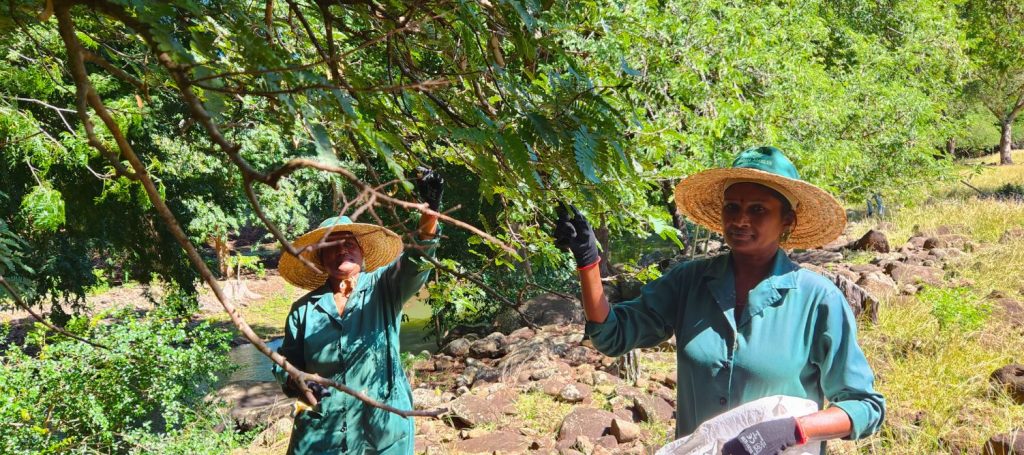
If organic farming seeks to reduce negative impacts, eco-responsibility goes a step further—it calls for actively restoring the natural systems that sustain us.
Eco-responsibility represents a commitment to nurturing our natural environment. This concept encourages us to rethink our relationship with nature, urging us to act purposefully and with awareness. As we confront ecological challenges, eco-responsibility invites us to engage with our surroundings more fully, understanding that our choices have an impact on our health and our society via the health of our planet.
At its core, eco-responsibility highlights the importance of stewardship—a commitment to caring for the land, air, and water that support us. This stewardship is based on the understanding that our well-being is closely tied to the health of the ecosystems we inhabit. Every choice we make, from the food we eat to the products we buy, creates ripples that can either harm or help.
This idea challenges us to confront the contradictions of modern consumerism. In a world where sustainability has become a popular term, the appeal of ease and mass production often overshadows the importance of local and genuinely sustainable practices.
As consumers increasingly look for organic products, we must ask ourselves: are we prioritizing labels over real value? This question reminds us to look beyond certifications and engage with the stories behind our food and products.
Planty’s journey in eco-responsibility
At Planty, we are dedicated to a transformative journey toward eco-responsibility—one that acknowledges the urgent need to restore the gaps in our relationship with nature.
In modern society, where the pace of life often overshadows our bond with the environment, we believe that reviving our relationship is essential for a more livable future. By using local plants, we create infusions that value the unique ethnobotanical heritage of Mauritius.
Each blend we offer tells a story of tradition, culture, and the connection that communities have with their environment. These plants are more than ingredients; they represent the deep connection between people and nature.
Our approach is rooted in a desire to foster connections—not only with the Earth but also with our community and our consumers. By promoting the use of local botanicals, we aim to educate and inspire a new generation to appreciate the natural wealth that surrounds us.
(1) IFOAM Organics Europe – Biodiversity, soil, and water – Producing food while preserving our natural resources.