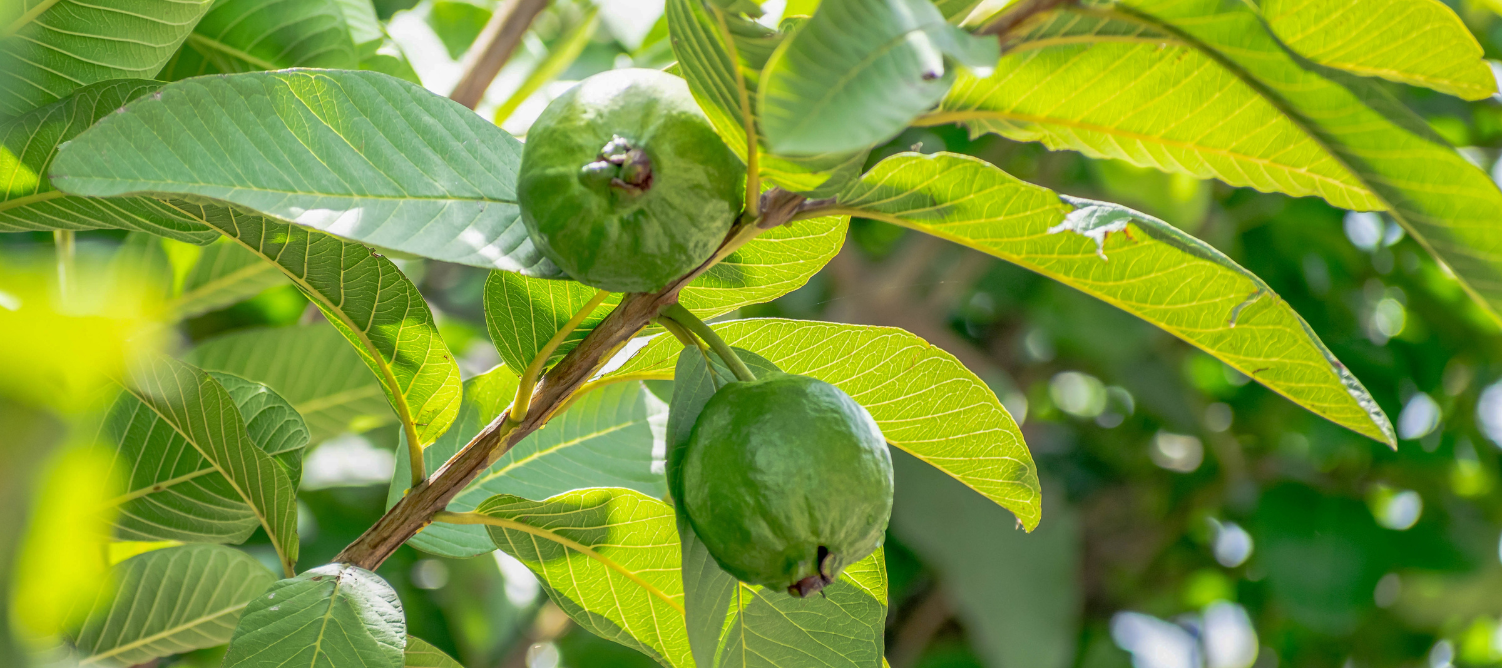
Guavas (Psidium guajava) are more than just staples of tropical landscapes; they are silent witnesses to centuries of cultural exchange, survival, and adaptation. From the ancient civilizations of the Americas to the shores of Mauritius, guavas have journeyed across the globe, carrying with them a wealth of traditional knowledge and practical healing properties.
In Mauritius, they have woven themselves into the fabric of island life, serving not only as a medicinal remedy but also as a symbol of resilience and adaptability.
This is the story of guavas—how it came to Mauritius, became interwoven with the island’s ethnobotanical traditions, and continues to thrive in the island’s cultural and medicinal practices today.
The Journey of Guava: From the Americas to the Indian Ocean
Guava’s journey begins long before its arrival in Mauritius, tracing back to the tropical landscapes of Central and South America. During Christopher Columbus’s second voyage to the New World, Frère Ramón Pané, accompanied the expedition and remained on the island of Hispaniola (present-day Haiti and the Dominican Republic) from 1494 to 1499. Pané, who sought to learn the language of the native Taíno people, became the first European to document the use of guava (Psidium guajava), which the Taínos referred to as “guabazza.” In his writings, Pané described how the Taínos revered guava not only for its fruit but also for its bark and leaves, which were utilized in both spiritual and medicinal practices. The Taínos believed that spirits consumed guava fruit, while they brewed the bark and leaves into medicinal infusions to treat ailments such as digestive issues and fevers. By the 16th century, European colonizers, including the Spanish and Portuguese, began introducing guavas to their newly acquired territories.
The fruit traveled across the seas, reaching Africa, Asia, and the Indian Ocean as part of the colonial trade. It was in this manner that guava made its way to Mauritius, an island in the Indian Ocean known for its rich multicultural heritage shaped by African, Indian, and European influences.
Guava’s Arrival in Mauritius: A New Home for a Resilient Plant
The guava tree was introduced to Mauritius in the 18th century, likely as part of colonial efforts to cultivate tropical crops that could support plantation economies.
By 1753, the French naturalist L’abbé de la Caille documented the presence of guava trees on the island, highlighting their rapid integration into the local ecosystems. The plant adapted effortlessly to Mauritius’s fertile volcanic soil and tropical climate, thriving across the island’s diverse landscapes.
Mauritius, with its unique blend of cultures and a history shaped by African, Indian, and European influences, quickly embraced guava as an integral part of local traditions. The islanders—drawing from African, Indian, and European medicinal practices—began to incorporate guava into their ethnobotanical knowledge. Guava, and particularly the leaves, which had already been used by indigenous peoples in the Americas for centuries, became a valued element of Mauritian folk medicine.
By the 19th century, guava fruits were widely cultivated and adopted. The botanist Louis Bouton, who studied the island’s flora, identified two prominent varieties of guava—red and yellow. He particularly emphasized their medicinal applications. During cholera outbreaks, red guava leaves were used in decoctions to alleviate symptoms such as vomiting, diarrhea, and intestinal distress.
This highlights how guava rapidly became an essential component of Mauritian ethnobotanical traditions, integrating imported knowledge with local practices.
Guava in Mauritius: A Testament to Healing
For the people of Mauritius, guava is deeply rooted in the island’s cultural heritage. The plant has been recognized for its antibacterial, antiviral, and anti-inflammatory properties —The guava tree itself holds much broader significance in Mauritian life, connecting people to their environment and to one another.
In traditional medicine, local healers, influenced by African, Indian, and Chinese herbal practices, have utilized guava leaves in various ways. Brewed into teas for digestive health, applied as poultices for wounds, or chewed to alleviate oral discomfort, guava leaves have long been valued for their healing properties. (1)
Yet, beyond their medicinal uses, the guava tree and its leaves symbolize a deeper significance: a cultural and social bond between the people of Mauritius and the land they cherish. One of the most cherished traditions in Mauritius is the leisurely family walk to gather fresh cherry guavas. These walks, often enjoyed together as a family or community, are not primarily for medicinal purposes but rather for collecting fruit to eat. The cherry guava harvest is a celebration of nature’s bounty, and the simple act of walking through the countryside to pick the fruit strengthens bonds between generations. Children learn the value of nature, elders pass down stories, and families reconnect with the environment that sustains them. In this way, guavas are more than just a food source; they play a central role in connecting Mauritians to the rhythms of nature and to one another.
Whether for healing or nourishment, guavas—and the gatherings that revolve around them—serve as a living testament to the enduring relationship between the people and the land.
The Ecological Challenge: Guava as an Invasive Species
While guava has become a cherished part of Mauritian culture, its ecological impact is not without controversy. The introduction of cherry guava (Psidium cattleianum locally known as « goyave de chine ») to the island in the 18th century has raised significant ecological concerns. This variety grows in dense thickets that have outcompeted native flora in certain areas. Cherry guava has become an invasive species, particularly in the upland regions of Mauritius, where it poses a threat to the biodiversity of the island’s endemic forests.
The dense growth of cherry guava has resulted in significant ecological changes, displacing native species and disrupting the island’s fragile ecosystems.
Guava in Modern Mauritian Life: Where Tradition Meets Innovation
In contemporary Mauritius, the legacy of guava remains vibrant and embedded in island life. Although guava is sometimes regarded as invasive in certain areas, its cultural and medicinal significance continues to flourish. Modern-day Mauritians still use guava, whether through traditional remedies passed down through generations or simply for the enjoyment of the fruit. The increasing interest in herbal medicine and natural wellness has brought renewed attention to guava leaves, whether the cherry guava or the common guava, with scientific research increasingly supporting their health benefits. As individuals seek natural alternatives for everyday wellness, the role of guava has been rediscovered, both for their medicinal properties and as a symbol of local resilience and resourcefulness.
At Planty, we celebrate the enduring connection between Mauritius’s botanical history and its contemporary practices.
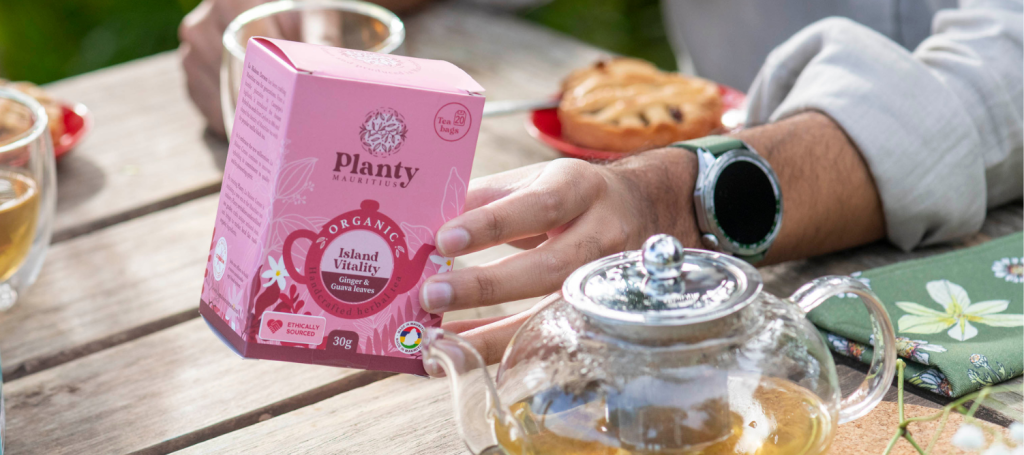
Our Island Vitality blend, which features both common guava and cherry guava leaves alongside ginger, pays homage to the island’s rich ethnobotanical heritage. This infusion honors the guava’s significance in local culture, combining the powerful benefits of guava with the warming properties of ginger to create a revitalizing tea that connects the island’s past to its future.
Conclusion: Guava’s Enduring Legacy of Resilience and Adaptation
The story of guava is one of resilience and adaptation. From their roots in the tropical Americas, these fruits have journeyed across the seas to the heart of Mauritius, guava have evolved into more than just a remedy. They stand as a testament to the strength of nature and the ingenuity of the people who have used them throughout history. In Mauritius, where the plant has established itself within a vibrant tapestry of cultures and traditions, guava continues to thrive—serving both as a symbol of the island’s profound connection to nature and as a living legacy of lifestyle and healing. The humble guava serves as a reminder of the profound relationship between humans and the natural world. It is not merely a plant; it is a living bridge connecting the past, present, and future, embodying the resilience and adaptability that have defined both the island of Mauritius and the global journey of this extraordinary tree.
(1) Elixabet Díaz-de-Cerio Vito Verardo Ana María Gómez-Caravaca Alberto Fernández-Gutiérrez Antonio Segura-Carretero. Health Effects of Psidium guajava L. Leaves: An Overview of the Last Decade. (2017)